×

The Standard e-Paper
Kenya’s Boldest Voice
 The Standard Group Plc is a
multi-media organization with investments in media platforms spanning newspaper
print operations, television, radio broadcasting, digital and online services. The
Standard Group is recognized as a leading multi-media house in Kenya with a key
influence in matters of national and international interest.

Audio By Vocalize
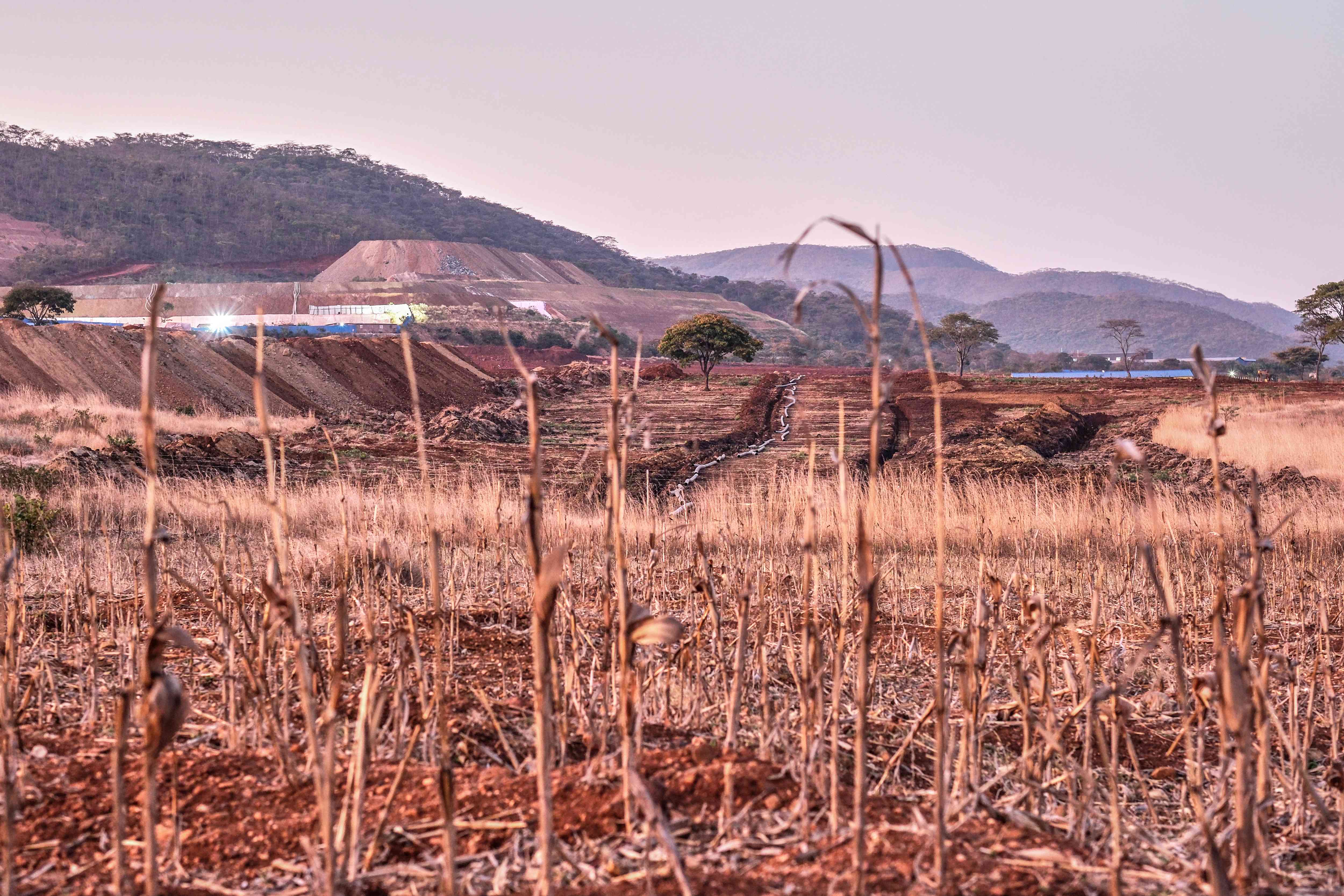
Once-green hills outside Zimbabwe's mining town of Shurugwi have been transformed into barren slopes, pockmarked by open pits dug by a Chinese-owned company linked to the son of President Emmerson Mnangagwa.
Bulldozers and excavators raised dust that seeps into houses while rains washed cyanide used to extract the precious metal into rivers, locals and environmental activists told AFP.
A major revision under way of a colonial-era mining law promises to boost protection from damage caused by open-cast mining like this, but critics have their doubts.
"There is dust everywhere, even in the food," said local resident Bright Mavedzenge, 45. "We close windows, but it still gets in," he told AFP.
A nurse said the hospital was seeing more patients with respiratory complaints, with some reports of silicosis.
Houses and water reservoirs had been cracked by blasting, said residents' association vice chairman Pardon Machocho.
Families were displaced to make way for operations and artisanal miners pushed off their claims, said Machocho.
The main operator in the area since 2021 is Chinese-owned Zimbabwe Chenxi Investments, which lists a son of President Emmerson Mnangagwa as chairman.
Tensions turned violent this month when Chenxi security reportedly tried to drive out artisanal miners, resulting in clashes that left one dead.
Zimbabwe's mineral wealth is the backbone of its economy: the southern African country is among leading producers of platinum metals, chrome and lithium, much of it exported to China.
Gold is its top export, drawing in foreign investors but also tens of thousands of small-scale miners.
The damaging "bed leaching" method that uses cyanide is being employed at "unprecedented" levels across the country, activists said.
A bill before parliament to replace the outdated 1961 Mines and Minerals Act, which underpins the entire sector, includes clauses to boost community and environmental protection.
It requires, for example, environmental impact assessments before a mining licence is issued and introduces an environmental restoration fund.
More broadly, it includes provisions on "strategic" minerals in line with a "resource nationalism" drive under way in several African countries.
Stay informed. Subscribe to our newsletter
The first digitalised registry of all mining titles and a new mining court could increase transparency and accountability.
The bill goes "way further" than the current law as regards community and environmental protection, said legal expert James Tsabora.
"It has procedures, inspection processes, licence renewal requirements, environmental standards and community consultative processes that are meant to implement responsible mining," he told AFP.
But the predominance of government in the reconstituted mining board, which oversees mining rights and governance, was a concern for resource activist Farai Maguwu, who said the body should be independent.
Corruption was "frequent" in mining, he said, noting the exclusion of parliamentarians as community representatives.
"It is very unlikely that aggrieved persons, especially communities, will find relief from this board if they find their rights trampled," he told AFP.
Independent legal watchdog Veritas has said conflict-of-interest safeguards had been removed and there was excessive ministerial discretion on strategic minerals.
Enforcement and compliance had to be "followed religiously because without this, our mineral wealth will ultimately become a curse," said Shamiso Mtisi, Zimbabwe Environmental Law Organisation deputy director.
In Shurugwi, it may be too late for any protection afforded by the new act while some locals suspected the mining company benefited from its association with Collins Mnangagwa.
Chenxi told AFP it had valid environmental impact assessment certificates and underwent regular government inspections.
"The company waters roads to suppress dust, controls stormwater and siltation," general manager Simon Karimanzira said.
It had planted 20,000 indigenous trees in 2025 and closely monitored cyanide levels in the groundwater. Anyone forced to move received "healthy compensation", he said.
But community grazing land had been taken over and there was a new plan for nearly 150 graves to be exhumed to give way to mining, said Machocho, from the residents' association.
"Shurugwi will end up an uninhabitable ghost town if wanton extraction continues," he said.




Subscribe to our newsletter and stay updated on the latest developments and special offers!