×

The Standard e-Paper
Stay Informed, Even Offline
 The Standard Group Plc is a
multi-media organization with investments in media platforms spanning newspaper
print operations, television, radio broadcasting, digital and online services. The
Standard Group is recognized as a leading multi-media house in Kenya with a key
influence in matters of national and international interest.
The Standard Group Plc is a
multi-media organization with investments in media platforms spanning newspaper
print operations, television, radio broadcasting, digital and online services. The
Standard Group is recognized as a leading multi-media house in Kenya with a key
influence in matters of national and international interest.

Audio By Vocalize
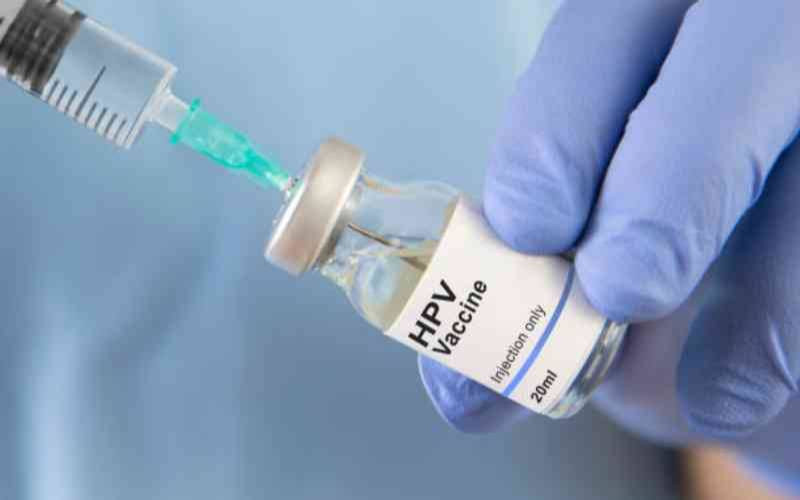
HPV vaccination for boys can help stop cervical cancer. [iStockphoto]
Momentum is growing globally, and in Kenya, to expand HPV vaccination beyond girls to include boys and adult women, as medical experts increasingly warn that protecting only one gender is no longer enough to eliminate cervical cancer.
For years, Kenya’s HPV vaccination programme has focused on girls aged 10 to 14, a strategy designed to prevent cervical cancer, which primarily affects women. But new scientific evidence and public health experience from countries with successful vaccination programmes show that vaccinating boys significantly reduces transmission of the virus responsible for multiple cancers.
Health experts now argue that HPV prevention must shift from a “girls-only” approach to a population-wide strategy.
“Vaccinated boys also protect girls,” explains Dr Elly Odongo, Secretary General of the Gynaecological Oncology Society of Kenya. “A boy who is vaccinated cannot easily transmit HPV. Ultimately, vaccination protects everyone.”
To understand why this shift matters, it is important to understand HPV itself.
HPV, Human Papillomavirus, is a microscopic virus invisible to the naked eye. It infects cells in the cervix, disrupting normal cell division and gradually transforming healthy cells into cancerous ones, leading to cervical cancer.
The HPV vaccine works by stimulating the immune system to develop protection against the virus before exposure occurs.
So how does infection happen?
“Through sexual intercourse,” Dr Odongo says.
HPV may sound similar to HIV because both are associated with sexual transmission. However, the viruses behave very differently.
“Unlike HIV, HPV transmission cannot be completely prevented by condoms,” Dr Odongo explains. “Condoms do not provide 100 per cent protection. Labio-scrotal contact alone can transmit HPV.”
HPV spreads mainly through skin-to-skin contact rather than bodily fluids, meaning infection can occur even when condoms are used.
Globally, HPV infection is extremely common. Kenya lacks comprehensive national prevalence data, but international figures offer a perspective. In the United States alone, more than 40 million people are currently living with HPV.
Stay informed. Subscribe to our newsletter
Research published in the Journal of the American Sexually Transmitted Diseases Association estimates the lifetime probability of HPV infection among people with at least one opposite-sex partner at 84.6 per cent for women and 91.3 per cent for men.
A 2023 systematic review and meta-analysis published in The Lancet found that nearly one in three men over age 15 carries at least one genital HPV type, while one in five is infected with high-risk cancer-causing strains.
Yet most people never realise they are infected. “Most of the time, the immune system clears the virus or prevents symptoms,” says Dr Odongo. “Many people carry HPV without knowing it.”
Some low-risk strains cause genital warts, but the greatest concern lies with high-risk strains linked to cancer. HPV testing worldwide typically screens for 14 cancer-causing types.
Kenya introduced HPV vaccination in 2019 using a two-dose schedule targeting girls aged 10 to 14, when recipients are least likely to have been exposed to the virus. The strategy aimed to achieve maximum public health benefit because cervical cancer affects women.
However, expanding vaccination coverage is now gaining traction.
At the Africa Health Business Symposium in Nairobi, the pharmaceutical company Merck Sharp & Dohme (MSD) Africa announced plans to introduce commercially available HPV vaccines for boys and adult women, who are currently excluded from the public programme.
“Personally, my entire family, including my son, has received the HPV vaccine,” said Zwelethu Bashman, Managing Director for MSD South Africa and Sub-Saharan Africa. “While girls benefit most at a young age, vaccination should ideally include everyone.”
Experts say vaccinating boys not only protects them from penile, oral and throat cancers but also helps build herd immunity, reducing the circulation of HPV across the population.
Australia provides a striking example. After implementing vaccination programmes targeting both boys and girls, the country has nearly eliminated genital warts and is approaching World Health Organisation thresholds for cervical cancer elimination.
Kenya has also strengthened its prevention strategy. In November 2025, the country transitioned from a two-dose to a single-dose HPV vaccination schedule following recommendations from the World Health Organisation’s Strategic Advisory Group of Experts on Immunisation (SAGE).
Global evidence reviewed by SAGE confirmed that a single dose provides equally strong and long-lasting protection against cancer-causing HPV strains.
The science is increasingly clear: eliminating cervical cancer will require protecting entire communities, not just girls.
Vaccinating boys, alongside girls, represents the next critical step towards reducing HPV transmission and ultimately ending one of the most preventable cancers of modern medicine.







Subscribe to our newsletter and stay updated on the latest developments and special offers!








 join
join